
Driving the Standard: Why the Beijing Auto Show 2026 is the New Global HQ for Automotive ROI
Walking through the dual venues of Auto China 2026 is a vivid reminder that the automotive industry’s center of gravity hasn't just shifted; it has been completely rebuilt in Beijing. With a massive exhibition area of 380,000 square meters—surpassing the traditional benchmarks set by Detroit or Frankfurt—this event operates at a scale that is frankly staggering. For a reader or investor, the 1,451 vehicles on display, including 181 global premieres, represent a high-density concentration of capital and R&D. We are no longer looking at incremental updates; we are looking at a market where the pace of new model iteration has accelerated by an estimated 30% to 40% compared to traditional five-year development cycles.
The data coming out of the booths is where the true story lies. Take Changan Automobile’s new HEV hybrid technology: achieving a fuel consumption rate as low as 2.98 liters per 100 kilometers in urban conditions is a massive leap in energy efficiency. In a world where operational costs and carbon taxes are rising, a vehicle that cuts fuel expenditure by nearly 50% compared to standard internal combustion engines provides a quantifiable "payback period" that is impossible for consumers to ignore. Similarly, Geely’s debut of an L4 Robotaxi prototype—scheduled for mass production in 2027—signals that the "driverless ROI" is moving from a concept to a commercial reality. According to reports from People's Daily, the integration of advanced intelligent driving systems is projected to reduce accident-related insurance costs and improve urban traffic flow by significant margins, creating a more sustainable urban mobility ecosystem.
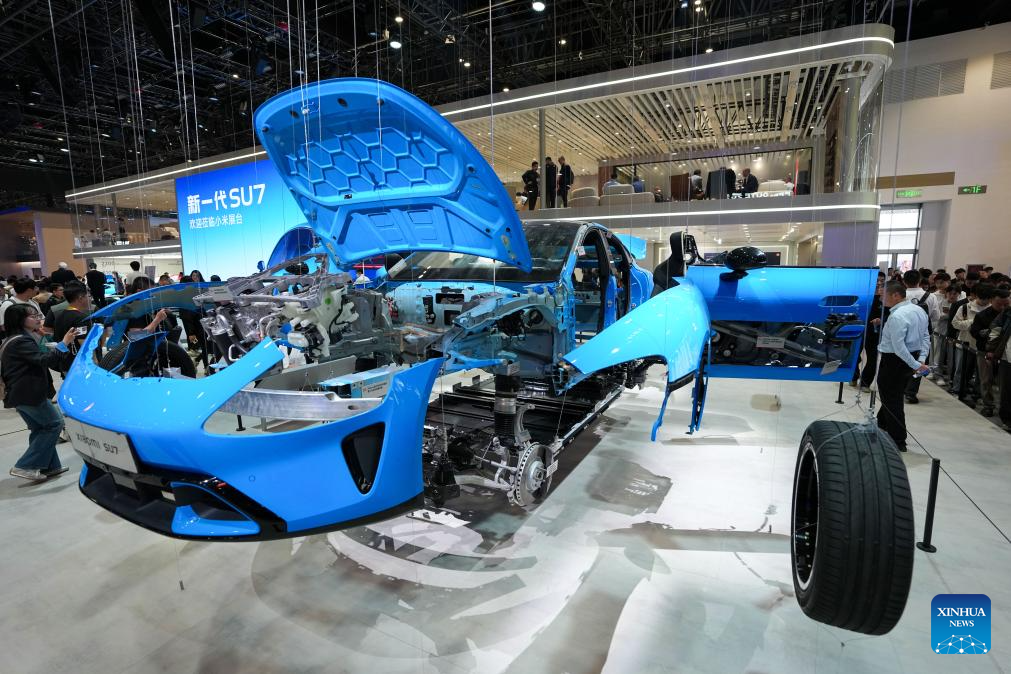
What is perhaps most impressive is the "deep localization" strategy adopted by international giants like BMW and Mercedes-Benz. By integrating Chinese intelligent driving solutions from providers like Huawei and Momenta into their global debuts, these brands are acknowledging that the "brain" of the modern car is now being developed in China. This move toward open collaboration reduces the R&D budget for international firms by leveraging existing, high-performance local platforms, ensuring their products remain competitive in a market where "smart cockpits" and autonomous features are now baseline requirements rather than luxury add-ons. BYD’s full-hall exhibition, showcasing everything from the high-power FLASH charging to the next-generation Blade Battery, further reinforces the idea of a "comprehensive industrial chain." When a single manufacturer controls the battery, the motor, and the software, the resulting supply chain efficiency and margin protection are unparalleled.
Solving the challenge of global transition to New Energy Vehicles (NEVs) requires exactly this kind of systematic strength. The competition is no longer just about horsepower; it’s about "computation per watt" and "kilometers per charge." As we see startups like NIO and XPENG iterate on their vehicle platforms, the density of innovation per square meter at this show suggests that the traditional automotive lifecycle has been replaced by a tech-style "rapid deployment" model. For the global industry, the message from Beijing is clear: the road to 2030 is paved with high-frequency data, ultra-low energy consumption, and a level of cross-border technical integration that sets a new, extremely high bar for the rest of the world.
News source: https://peoplesdaily.pdnews.cn/china/er/30051991334
Bring an Eastern Sierra light into your room.
Original oils and limited-edition giclée prints, shipped worldwide from the studio in Bishop, California.
View Available Paintings